
Age of Wonders 4 Units: Tiers, Recruiting, and Armies
Learn how Age of Wonders 4 units work, from tiers and recruitment to army composition, enchantments, and the Manta update's naval and frost combat changes.
Jump to

How Units Work: Tiers, Classes, and Origins
Your army needs troops that work together, especially when expensive recruits start competing for upkeep. Age of Wonders 4 units combine tiers, classes, racial traits, and magical upgrades, so two troops with similar starting stats can develop very differently. Learn those distinctions before recruiting, and you can build around your faction’s strengths while filling the gaps in its roster.
Tier, rank, class, and type mean different things
A unit’s tier runs from I through V and represents its overall strength category. Rank increases through experience, improving an individual troop within that tier. Heroes follow a separate leveling system.
Class describes a unit’s combat role and helps determine which enchantments affect it. A shield unit, battle mage, and support unit each contribute something different, even when they share a tier.
Type adds another layer. Undead, Elemental, Ethereal, and Dragon are examples of types that interact with protections, immunities, and other abilities. These categories can overlap with a unit’s class and origin.
Inspect those properties before choosing a target. An Elemental’s immunity to Bleeding, for example, matters when you are counting on an attack’s secondary effect.
Cultural, racial, tome, and wildlife units
These labels describe overlapping parts of a roster:
- Cultural units come from your faction’s culture and carry its combat mechanics by default.
- Racial units inherit their race’s form traits and applicable transformations. Look for the race name on the unit panel.
- Tome units become available through tomes. Some are racial troops; others are creatures or constructs with their own properties.
- Wildlife units have fixed appearances and traits. You can obtain them through several routes, including summons, events, creature cages, and Rally of the Lieges.
A racial tome unit can benefit from your race’s transformations without automatically receiving your culture’s combat mechanic. Check both its properties and your enchantments when adding it to an established army.
Official page: Age of Wonders 4 (paradoxinteractive.com)
Recruiting Troops and Paying Their Upkeep
City recruitment and summoning draw on different resources and queues. Use both when you need reinforcements without making every replacement wait for the same city.
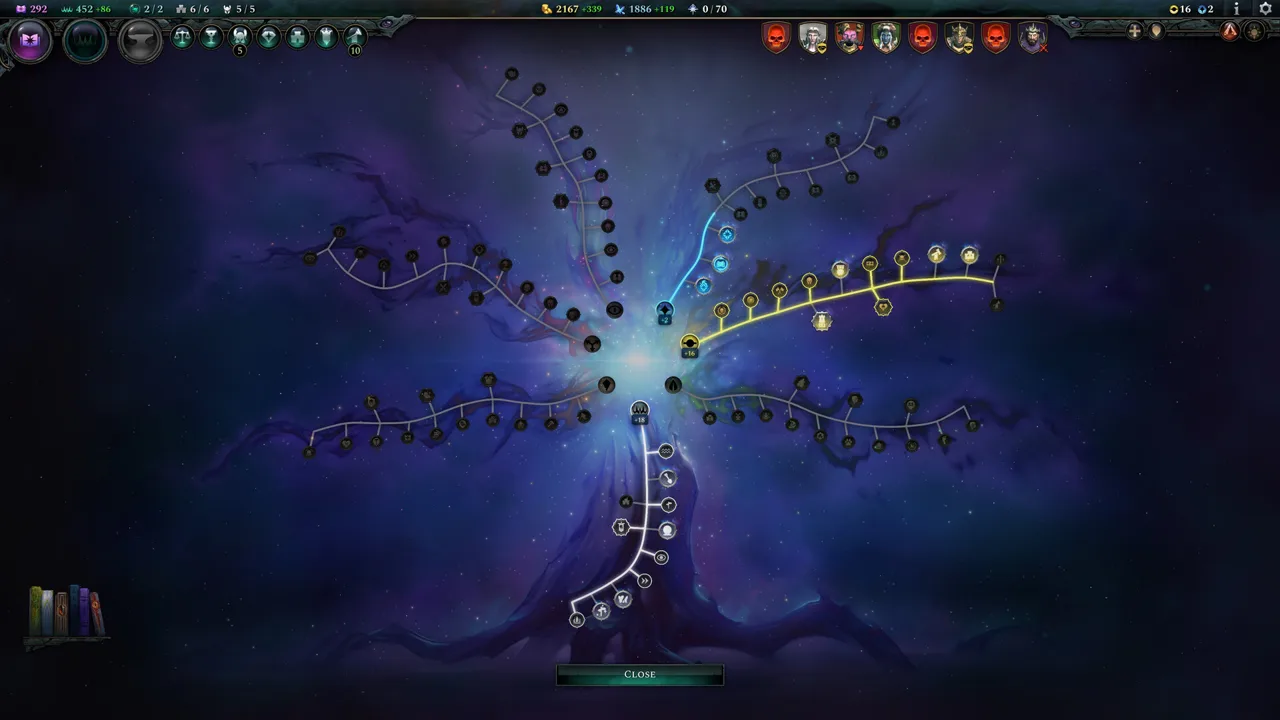 Image: Steam / Triumph Studios
City recruitment uses Draft
Cities recruit units through their unit production queue, spending Draft over multiple turns. Recruitment can be hurried with Gold.
Higher-tier recruits require the appropriate city development. Before committing to a new military tome, inspect the unit’s recruitment requirements alongside your available Town Hall upgrades.
The Manta update also makes Trade Routes use the unit production queue. Their Draft cost depends on the destination and distance, and their production can be hurried.
Finish urgent replacements before starting a route in the same city. A trade investment and a defensive recruit now compete for that city’s drafting capacity.
Strategic summons and combat summons
Strategic summoning uses World Casting Points, generally alongside Mana. Summoning higher-tier creatures also requires the relevant Wizard Tower development in your Throne City.
Combat summons use Combat Casting Points and disappear after the battle. Treat those temporary creatures as tactical resources: send them into dangerous positions when doing so protects troops you would otherwise need to replace.
Permanent recruitment also includes Rally of the Lieges, event rewards, creature cages, and certain post-battle outcomes.
Upkeep continues after recruitment
A free unit can still have an ongoing cost. Its normal resource requirements determine its upkeep, and enchantments can increase the bill. Tier IV and V units also require Imperium upkeep.
Check the unit panel before accepting or recruiting another expensive creature. If your empire cannot pay the required upkeep, the affected troops suffer a substantial Morale penalty.
For Rally recruitment, several Manta changes reduce cost categories:
- Entwined Scourge and Accursed Trickster move from Tier 4 High to Tier 4 Medium.
- Sun Guardian and Moon Guardian move from Tier 5 High to Tier 4 High.
- Phantasm Warrior moves from Tier 2 Medium to Tier 1 Medium.
- Bone Dragon moves from Tier 5 Souls to Tier 4 Souls.
These are recruitment cost categories, not changes to the units’ combat tiers.
Building a Six-Unit Army
An army holds six units. In standard battles, up to two nearby friendly armies can reinforce from within two world-map hexes, allowing as many as 18 units per side.
 Image: www.paradoxinteractive.com
Check the reinforcement indicators before starting combat. Splitting off a fast unit can extend your reach while the rest of the force stays close enough to join, but the battle preview needs to show the support you expect.
Start with roles, then specialize
When you have not scouted the enemy, build a mixed army:
- Assign a hero a clear melee, ranged, or support role.
- Include troops that can hold the frontline.
- Bring damage dealers with different attack options.
- Add healing, buffs, or other support when your roster allows it.
For example, use a hero, two frontline troops, two ranged or magical attackers, and one support unit. Adjust that composition after examining the opposing army’s defenses and abilities.
Avoid filling every slot with the same damage channel before seeing the enemy. A force built entirely around one attack type has fewer alternatives when it meets resistant targets.
Fill cultural gaps through other recruitment options
Use tome recruits, summons, and Rally of the Lieges to add roles your current cultural roster lacks. Inspect foreign racial troops carefully: their race determines which racial traits and transformations they receive.
Keep movement in mind, too. An army travels at the speed of its slowest member. Move reinforcements separately when combining them early would slow the troops already heading toward the front.
For a large empire, connect recruitment centers and active fronts with roads and teleporters. Position defensive armies around exposed approaches and shared fronts so they can respond to the territory they actually need to protect.
Experience, Healing, and Defensive Stats
Veteran troops carry more value than their original recruitment cost suggests. Preserve them through positioning and recovery while continuing to develop replacements.
 Image: PlayStation Store
Legendary troops can keep improving
Ordinary units gain ranks through experience. Legendary is not the end of their progression: further Exalted ranks each add 10 HP.
Keep experienced troops in difficult fights when you need their strength. Rotate replacements into manageable battles when you can protect them, and keep heroes involved in combat so they continue earning levels.
Combat healing restores temporary HP
Healing during tactical combat normally grants Temporary Hit Points, which disappear when the battle ends. World-map regeneration handles lasting recovery.
Do not send a battered army straight into another engagement just because its health bars looked healthy during the previous fight. Inspect its remaining HP after combat.
For units made up of multiple models, casualties can reduce attack damage. Healing can restore models and their associated damage output, giving you a reason to heal an injured attacker before it takes its turn. Single-model units do not lose damage through model casualties.
Match your attack to the enemy’s defenses
Defense, Resistance, damage-channel Protection, and Status Resistance serve different purposes:
- Defense reduces damage from melee and missile attacks.
- Resistance reduces damage from magic attacks, magic melee attacks, and combat spells.
- Protection applies to a particular damage channel, such as Fire or Frost.
- Status Resistance reduces the application chance of effects with a listed base chance.
Inspect both the attack category and its damage channels. An attack’s appearance alone does not tell you which defenses it will encounter.
Likewise, a listed 60% status chance is a base chance. Check the target’s Status Resistance before relying on that effect to stop its next turn.
Enchantments and Transformations
Enchantments and racial transformations follow different eligibility rules. Read the affected-unit list before spending resources on an upgrade.
Unit enchantments apply to specified classes or types and add upkeep. Race transformations affect the selected race, making racial identity important even when two troops perform similar battlefield jobs.
The Manta update makes unit enchantments available as research options even when you do not yet own an eligible unit. Research an enchantment ahead of its intended recruits when that fits your army plan.
Magic Fighters gain additional interactions
The Monk now has the Magic Fighter type, and Meditate can be used while the unit is engaged by an enemy.
In the Tome of Cryomancy, Frost Blades becomes Frost Infusion. Its eligible troops now include Magic Fighters, and its bonus-damage conditions use Frozen and Chilled.
Check your existing Magic Fighters after researching it rather than assuming an older enchantment description still applies.
Merfolk connect several upgrade paths
Naga Transformation now adds the Merfolk type, including Amphibious movement and extra speed and damage in water.
That type also interacts with several other effects:
- Force of Nature targets Merfolk instead of the former Naga category.
- The Horned God’s Shepherd of the Wilds now includes Merfolk, Spiders, and Dragons alongside its previous categories.
- Cosmic Overdrive includes Ethereal, Elemental, Merfolk, Umbral Demon, Fey, and Magic Origin units.
Cosmic Overdrive also shortens negative status durations by one turn, with a minimum duration of one. Its Very Fast Movement benefit specifically applies to non-Mythical Magic Origin units; the broader eligibility list does not give every affected creature that movement bonus.
Unit Changes to Revisit After Manta
Several familiar troops gain changes that affect their positioning, support abilities, or attack coverage.
| Unit | Manta change |
|---|---|
| Mortalist | Death Hex becomes Full Action, gains range from 4 to 6, and increases additional targets from 1 to 2. |
| Warlock | Sundering Curse loses Single Shot and increases additional targets from 1 to 2. |
| Bastion | Defensive Sweep loses Single Shot and increases damage from 16 to 30. |
| Skald | Combat Speed rises from 4 to 5; Song of Carnage adds Haste for 3 turns. |
| Glade Runner | Gains Swift and Hidden Hunter, granting +20% damage and accuracy while obscured. |
| Entwined Thrall | HP increases from 55 to 65. |
| Entwined Protector | HP increases from 100 to 110; Healing Sap rises from 20 to 30 HP and spawns flora obstacles. |
| Stormbringer | Storm Strikes damage rises from 15 to 16 and applies Electrified to secondary targets. |
| Blood Exarch | Gains the Polearm passive. |
Set up Mortalists before you need Death Hex: the longer range comes with a Full Action requirement. Position Glade Runners where they are obscured to activate Hidden Hunter.
The Skald’s healing also changes. Song of Revelry now heals 20 HP instead of granting Regeneration, while its Champion version heals 30 HP. Time the song around troops that have already taken damage.
Tide Spirits receive mobility and action changes as well. Both Lesser Tide Spirit and Tide Spirit increase Combat Speed from 4 to 5 and gain Slippery and Swift. Tide Spirit’s Tidal Wave becomes a Single Action, while its cone shrinks from 4 to 2 hexes. Reposition for the smaller cone before casting it.
Chilled Changes Frost Army Planning
Chilled introduces a stacking route to Frozen. Each stack deals a small amount of Frost damage per turn for three turns, and the effect stacks up to five times.
At five stacks, Chilled is consumed, the target takes a burst of Frost damage, and it becomes Frozen for one turn. Chilled also opposes Burning.
Focus compatible frost attacks on the same target when you want to reach the five-stack threshold. Check the effects on your abilities individually, because many former Slowed or Frozen effects now apply Chilled.
Frost units and abilities to inspect
- White Witch: Frost Bolts gain a 60% Chilled chance. Freezing Blast damage increases from 14 to 20, becomes a 1-hex-radius ability, and applies Chilled at the edge. Its Frozen chance falls from 90% to 60%.
- Snow Spirit: Chilling Burst applies 2 Chilled and has a 1-turn cooldown. Magic Strike gains a 90% Chilled chance.
- Lesser Snow Spirit: Chilling Burst applies 1 Chilled and has a 1-turn cooldown.
- Frost Dragon: Frost Aura always inflicts Chilled. Frost Breath adds Chilled alongside its 60% Frozen chance.
- Geomancer on cold terrain: Terra Bolts gains a 90% Chilled chance, while Geo Surge applies 2 Chilled.
- Primal Mammoth: Charge Strike applies 2 Chilled.
Frost Arrows now has a 60% chance to apply Chilled instead of Slowed. Frost Resonant Blades changes from a 30% Slowed chance to a 60% Chilled chance.
The Tome of the Cold Dark also replaces Summon Snow Spirit with Summon Frost Giant. Its Frostspire now allows drafting various frost-themed units up to Tier III.
Rebuild frost combinations around the actual Chilled effects available to your army. Frost Infusion’s bonus damage and the hero signature skill Frost Strikes now recognize Chilled, giving those stacks value before you reach Frozen.
Naval Units, Embarkation, and Trade Route Battles
The November update changes both the journey across water and the fight after you arrive:
- November 3, 2026: The Manta update launched alongside The Silver Seas.
- Embarking now costs a flat 20 Movement Points.
- Embarked troops lose their former -2 Defense and -2 Resistance penalties.
- Embarked troops gain Large Target, Reinforced, and -2 Fire Protection.
- Embarked troops no longer suffer damage reduction from casualties.
Plan crossings around the new flat cost, then inspect enemy damage channels before committing embarked troops to a naval fight.
Facing matters with Limited Maneuverability
Embarked troops, Ghost Ships, and Ironclads have Limited Maneuverability:
- Turning while moving consumes Movement Points.
- Rotate Unit consumes all remaining Movement Points.
- Opportunity Attacks and Retaliations cannot cover hexes behind the unit.
Choose your facing before spending your movement. Approach from behind when you want to exploit those restrictions, and protect the rear of your own formation.
Ironclads also gain Amphibious Movement.
Summons and teleports work at sea
Most summoning, resurrection, and transformation abilities now function on water battle maps, with a few exceptions, mostly involving plants.
A summoned land unit that cannot naturally traverse the battlefield receives Water Walk, allowing land movement across water hexes during combat. Magical teleport abilities also work on water, while non-magical teleport abilities are blocked when the unit is embarked.
Use those options when deploying support or temporary troops at sea. Amphibious units also become Wet while on water, so include that status when evaluating their interactions.
Trade raids are isolated fights
Raiding a Trade Route requires war with its owner. The raid triggers a 1v1 army battle against Trader Escorts, and neither side receives reinforcements.
Escort strength scales with the owning city’s trade infrastructure:
| Trade infrastructure | Escort composition |
|---|---|
| Base | 2 Tier I units |
| Trade Post | 3 Tier I units, 1 Tier II unit |
| Trade Quarters | 3 Tier I units, 3 Tier II units |
| Trade Bazaar | 1 Tier I unit, 3 Tier II units, 2 Tier III units |
Inspect the raid preview before committing. Nearby friendly armies cannot rescue an undersized raiding force, and surviving troops retain the damage they take.
A successful raid pays three times the route’s per-turn income. Weigh that payout against the health and replacements your raiders will need afterward.
Continue with
 Age of Wonders 4 Singer of Storms: Pack & Unit GuideExplore Age of Wonders 4 Singer of Storms, including Mael, Tempest Orb mechanics, the Storm Seamare mount, and Tidecallers water units. Plan your empire.
Continue exploring

Age of Wonders 4 Secrets of the Archmages: DLC Guide
Explore Age of Wonders 4 Secrets of the Archmages, unlock Shrouded Isles, collect Secret Spells, and discover six tomes across three magical Story Realms.
Age of Wonders 4 Best Custom Faction: Builds That Work
Find your Age of Wonders 4 best custom faction with High archers, Dark battlemages, and practical tips for early clearing, tome choices, and army upkeep.
Join the community
Official channels for news, updates and player help: